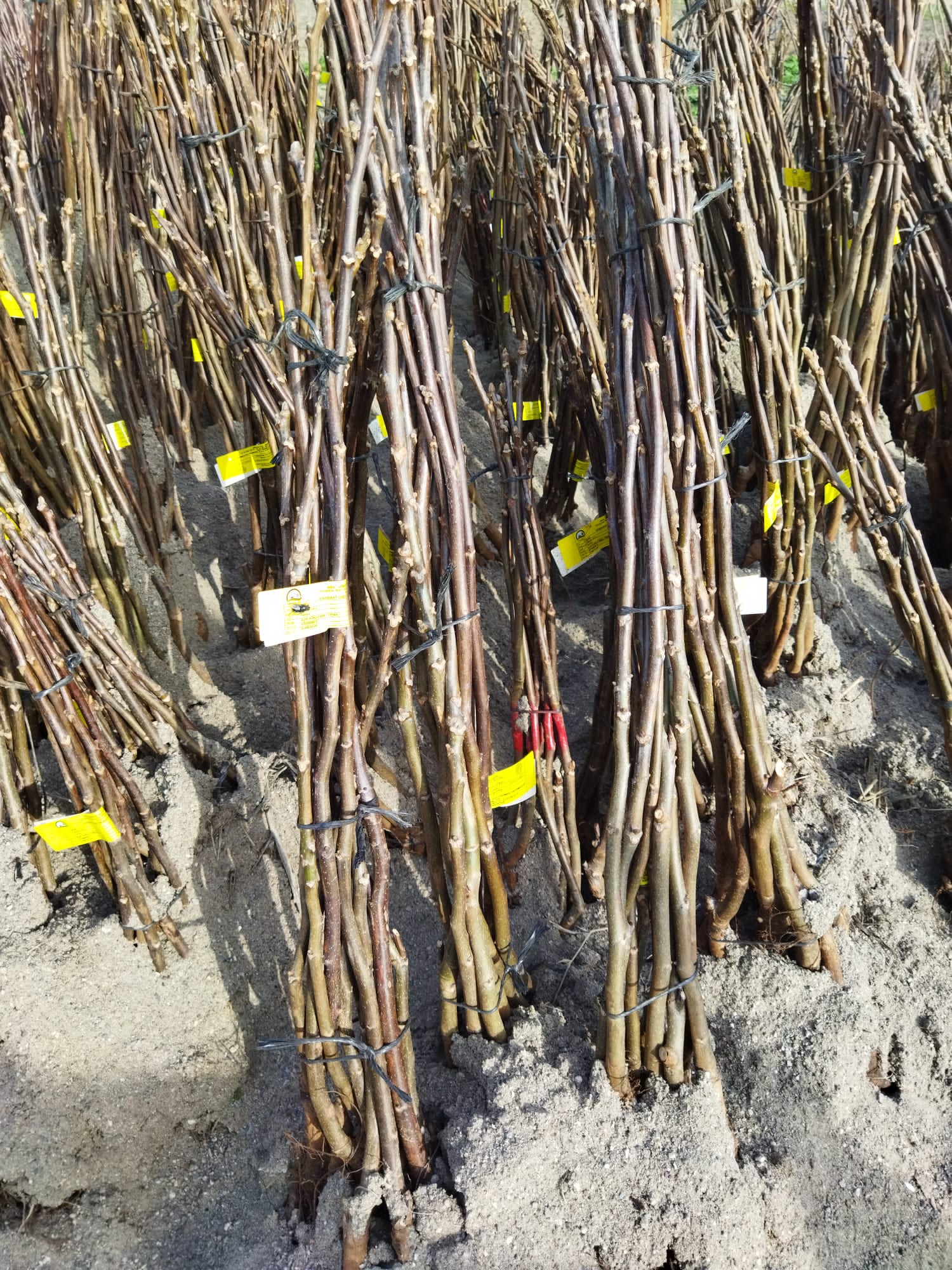
Climate Requests Climate requests of plum species are different. Among the existing species, P. Cerasifera is the best to comply with different climatic conditions. European plums (P. Domestica) is a relatively cold temperate climate fruit. Japanese plums (P. Salinica) give good results in non -cold areas. In the winter, the endurance of cold plums in cold and cold begins to decrease with the heating of the weather in the spring. Sensitivity increases in the flowering circuit. In the plums, the crown leaf is seen in -3.1 to -1.1 0C; Flowers opened -2.2 to 0.6 0C; It is known that young fruits are based on -1.1 and -0.6 oC. In terms of winter resting time, European plums require a cold time under +7.2 OC for more than 1000 hours. In Japanese plums, this period is up to 600 hours. Planting shape and time When the garden will be installed with fertile varieties, if you want to have several varieties in the garden, all kinds of blocks should be placed in the garden. When the garden will be installed in part with partially efficient or vicious varieties, the varieties must be sewn to dust each other. The powder ratio should be 1/9. If it is to be established with more than two varieties, the varieties should be arranged in 2 rows of 3 rows. When choosing the most suitable duster variety, the good features of the variety, as well as flowering times to dust each other, to have high germination power of flower powders and to select the varieties that will create a high rate of fruit as a result of mutual dusting. The number of powdered powers should be adjusted according to whether the dusting variety is suitable for economy and marketing. If a variety suitable for the purpose is used as a powdered, 1 row dustter is sufficient in 2 rows of main varieties. If it is obligatory to use a variety that is not suitable for production purposes as a powder, a garden should be installed in 8 main tree powder. In addition, the use of multiple types instead of a single kind of closure when establishing a garden should always be preferred as it affects the quantity and quality of fruit positively. Saplings can be sewn from November-December in the mild and non-rainy areas. Planting can be continued until the start of the spring development circuit. In the rainy or cold areas, the planting is made at the beginning of the spring season. Soil processing Using meadow plants in rainy areas, a continuous cover plant is kept in the gardens. When the cover plant grows, they are cut. In low rainfall, plum gardens are kept cleanly. In such regions, gardens are applied in autumn. When the soil pan in the spring, it is applied for the second time in the end of February or March. After the third version made in May, irrigation channels are opened. The bottoms of the trees are processed with anchor. If the gardens are grazed in summer due to irrigation, grass format should be preferred instead of applying the soil to avoid disrupting irrigation channels. Since the plum roots are spread in a part of the soil surface, deep soil processing should be avoided. IRRIGATION In regions exceeding 750 mm annual rainfall, plums can also be grown without irrigation. The amount of rainfall is mandatory in places that fall below this figure. Since the plums are rooted and the roots develop superficially, their water requests are more than deep -rooted fruit species. Among the existing species, the drought of P. Cerasifera species is based on the most. In the Aegean region, plum gardens are irrigated every 8-12 days in the period until the autumn rainfall from the second half of May. Irrigation is done in various ways. Irrigation furred, bowls, pan methods or furred-gravity, one of the forms of combinations are used. The irrigation system is selected according to the property of the soil, the wealth of the water source. Drip irrigation and mini sprinkler systems have also been implemented today. FERTILIZATION The amount of fertilizer to be given to plum trees varies according to the condition of nutrients in the soil, the type of soil, the age of the trees, the amount of product taken, the ecological region and the development of the trees. The most appropriate method is to determine the amount of fertilizer to be given according to leaves and soil analysis. Nitrogen fertilizers should be given before spring development at the end of winter. Plum trees respond to both sulfate and nitrate form of nitrogen. When selecting the fertilizer, price factor should also be considered. However, it is necessary to avoid using ammonium sulfate in soils with a pH below 6.5. Urea should be used in soils with a soil pH below 5.0. It is not recommended to apply nitrogenous fertilizer after mid -June. Late applications reduce the formation of color in the fruit, cause shoots to prolongs in autumn and increase the damage from winter cold. In young trees, 113-226 g of active nitrogen is applied for each age per tree. These amounts can be reduced and reproduced according to the desired growth status. 8.5-11.2 kg/decare active nitrogen application may be recommended in fruit-making trees. Phosphorus and potas fertilizers should be given at the beginning of the winter, between the rows in fruit -bearing trees, and in young trees around the crown projections. In addition to chemical fertilizers, 50 kg of well -burned farm manure (for fruit -giving trees) should be given every 2 years. In addition, green fertilization is useful.